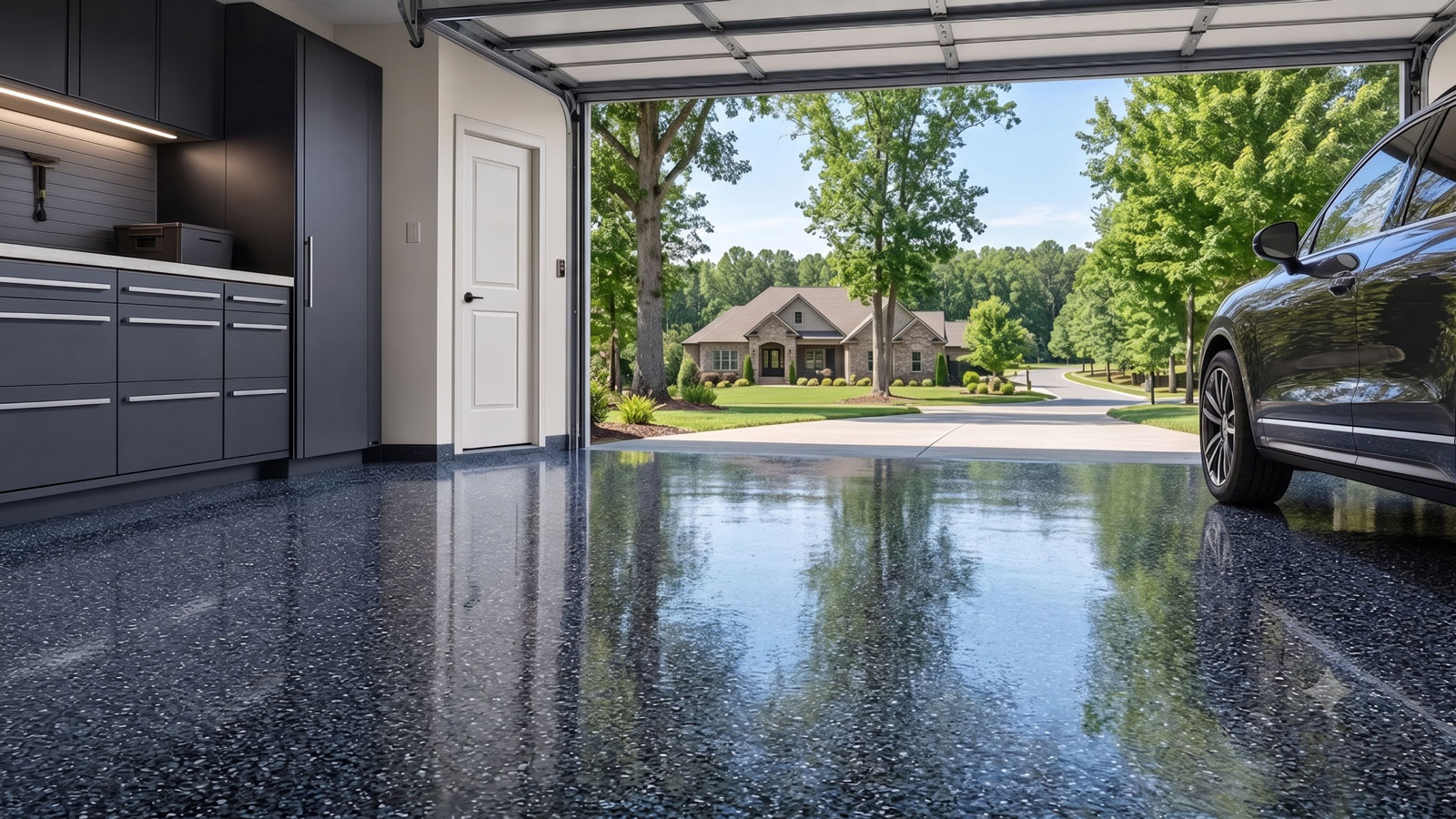
Garage Floor Coating in Germantown, TN
Floor Coating Services in Germantown, TN
A garage floor coating in Germantown, TN, starts with the condition of attached garages in established residential streets. Germantown distinguishes municipal drainage easements from drainage on private property. This context does not establish water damage or cracking at a specific property. Before selecting epoxy or polyaspartic, inspect old paint, sealers, oil, joints and repairs. The observed substrate matters more than a general claim about local conditions.
Its guidance identifies the Wolf River and Nonconnah Creek as regional watershed features. City engineering rules address runoff changes from landscaping and private improvements. Municipal runoff controls address streets and common infrastructure, while a homeowner needs to evaluate the private driveway and slab. Rain that crosses a garage threshold differs from wet tires dripping after a drive or dampness persisting when the room is empty. Those situations deserve different preparation or drainage responses.
For family vehicles and garage storage, discuss grinding, repair treatment, finish texture, alternative parking and manufacturer-specific curing requirements. In attached garages in established residential streets, apron drainage, worn tire areas and old resin may warrant closer evaluation when actually present. An estimate should specify the coating layers and site work, not promise that any decorative system will correct an unresolved moisture problem.
Local Market Insight
City engineering rules address runoff changes from landscaping and private improvements. This makes apron drainage, worn tire areas and old resin worth evaluating at the property, without assuming any particular floor needs drainage or surface repair.
What Affects the Cost of Garage Floor Coating in Germantown?
Price differences between similar-size Germantown garages commonly reflect concrete preparation. The installer should determine whether apron drainage, worn tire areas and old resin requires repair, old-coating removal or extra profiling, rather than add work based on the location alone.
Access around storage, the number of edges and a realistic reopening schedule also affect project scope. For family vehicles and garage storage, ask how long the space must remain clear and when tires can return after installation.
- Previous coatings: In attached garages in established residential streets, paint, sealer, old resin or bare concrete may be present. Confirm the actual finish and specify its removal or grinding requirements before new coating work begins.
- Drainage observations: Germantown distinguishes municipal drainage easements from drainage on private property. This public fact cannot determine moisture in a garage. Check observed runoff at the door, gutters and persistent damp areas rather than rely on a municipal map.
- Cracks and repairs: For apron drainage, worn tire areas and old resin, examine moving joints, patches and pitting separately. Filling a crack cosmetically cannot stop structural movement, and severely deteriorated concrete may need specialist assessment.
- Garage access: Cabinets, steps, wall edges and stored items change the work beyond floor area. A proposal should describe how equipment reaches corners and what belongings must move.
- Finish specification: Decorative flakes, texture, selected topcoat and number of layers alter appearance and cost. Discuss traction and practical cleaning before deciding on a color or sheen.
- Installation schedule: Humidity and air or slab temperature must meet the product instructions. For family vehicles and garage storage, obtain a clear cure and vehicle-return schedule and make temporary parking arrangements.
Call for a clear, project-specific estimate — or request one online.
Germantown Stormwater and Garage-Door Conditions
Germantown distinguishes municipal drainage easements from drainage on private property. Its guidance identifies the Wolf River and Nonconnah Creek as regional watershed features. These documented local distinctions are relevant to questions about runoff, but none determines whether a private garage contains moisture, damaged concrete or a failing finish. An installer should observe the site instead of using citywide data as a diagnostic shortcut.
City engineering rules address runoff changes from landscaping and private improvements. Watch where rainfall flows along the driveway and whether any water passes the door seal. Moisture from a vehicle immediately after rain is a different issue from persistent dampness at a bare slab. Photograph recurring wet spots, old coating blisters or deteriorated patches and raise them during the estimate.
Where apron drainage, worn tire areas and old resin is visible, ask whether grading, a door seal, cleaning, grinding or moisture testing is the appropriate response. A resin layer may improve cleaning on a sound prepared floor, but it is not a waterproofing solution for continuing exterior runoff. A written scope should distinguish coating work from separate drainage correction.
Preparation and Everyday Garage Use in Germantown
A garage in attached garages in established residential streets may have concrete poured or repaired well after the house was built. House age does not identify the slab's age. The contractor should look for old coatings, curing compounds, stains and previously patched sections, then explain an appropriate mechanical surface profile.
Examine apron drainage, worn tire areas and old resin, concrete joints and any areas with oil or worn paint. Ask how those features will be treated before application and what happens when movement or moisture makes a resin finish inappropriate. Surface grinding and bond preparation are more useful to compare than unsupported claims that one product chemistry always lasts longer.
For family vehicles and garage storage, clear storage and plan temporary vehicle access before work begins. Discuss decorative-flake texture, how wet shoes will grip the surface, how the finished floor should be cleaned and the manufacturer's reopening instructions. The best proposal explains preparation, each coating layer and site-specific limitations rather than promising uniform results throughout Germantown.
- Identify paint, sealer and old resin.
- Inspect cracks, joints and patch repairs.
- Check driveway-to-door runoff.
- Separate wet-vehicle puddles from lasting dampness.
- Plan storage relocation and equipment access.
- Get written cure and maintenance guidance.
Frequently Asked Questions
Does Germantown's stormwater program prove my garage has problems?
No. Germantown distinguishes municipal drainage easements from drainage on private property. This describes a public program or regional setting, not the actual condition of a private slab. Evaluate drainage, old finishes and moisture where observed before ordering repairs.
Can an older Germantown garage floor be coated?
Potentially. A slab may have been repoured or refinished after the house was built. The installer should check paint, sealer, joints, repairs and concrete soundness before selecting a suitable preparation method.
Should doorway runoff be corrected before coating?
Yes, if rainfall routinely enters the garage. Inspect the driveway grade, downspouts and door seal. Surface coatings do not replace drainage corrections, and persistent dampness may require a separate moisture investigation.
Is epoxy or polyaspartic better for Germantown?
Neither material is always better. Preparation, substrate condition, application temperature, system layers, finish texture and curing requirements determine suitability. Compare the proposed full installation instead of choosing only by the product name.
What belongs in a Germantown estimate?
Ask for surface grinding, necessary repairs, old-finish removal, joint handling, coating layers, edge details, finish texture and reopening time. For family vehicles and garage storage, also clarify temporary parking and household storage arrangements.
Germantown Neighborhoods & Local Context
Phone Quote Line
Speak with a floor coating specialist about your project and get a realistic estimate range.
(901) 499-3345Typical Project Cost
$3,000–$5,500
Typical range for a two-car garage. Final pricing depends on floor size, concrete condition, prep work, coating type, and finish options.
Helpful Guides
Other Service Areas